Calcium in Your Arteries. Understand It, Then Act On It.
Clear answers, in plain language, before you decide what comes next.
Clear answers, in plain language, before you decide what comes next.
#HarBlockage
SameNahiHota
Every heart is different. So is every blockage.
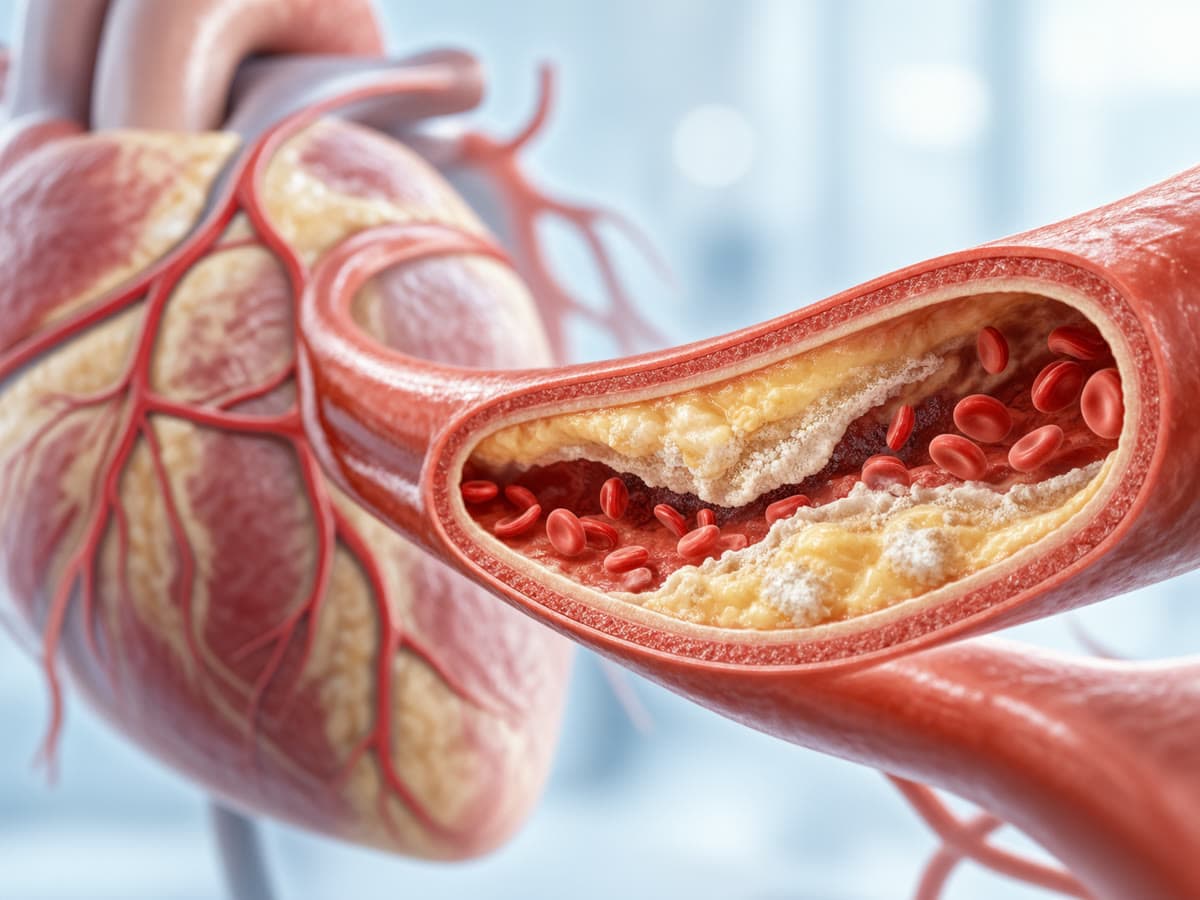
A healthy artery lets blood flow freely. Over time, fat and cholesterol build up inside the artery wall, and calcium settles on top, hardening it further. This narrows the passage and reduces blood flow to the heart. A calcium blockage isn't the same as a regular one. It's harder, stiffer, and needs a different treatment approach.
Tap a stage to see how it forms
Calcium blockages most commonly form in the arteries that feed the heart muscle directly. Doctors measure severity by how much the artery has narrowed; anything above 70% is considered severe and needs treatment.
Narrowing considered severe and in need of treatment.
A few factors raise the odds of calcium buildup in your arteries:
Tap a card to answer — see your self-check score once you're done.
Patients feel anxious before a cardiac procedure.
Angioplasty procedures happen in India every year.
Procedural success rate with IVL treatment.
Sources and references available on request.
Is each statement true or false? Pick an answer to find out.
No symptoms means no blockage.
Treatment always means open heart surgery.
Once you feel better, you can stop your medicines.